
Why Water Alone Isn’t Enough for True Hydration

Most of us know we need to drink water daily. What is less often considered is whether we are actually absorbing that water into our cells or whether it is simply passing through.
Hydration is not only about water intake. It is also about how well the body is able to absorb, retain, and use that water. Which is why someone can drink plenty of water and still not feel especially well hydrated. Sometimes it shows up subtly: dry lips, dull or parched skin, sluggish digestion, afternoon headaches, brain fog, or that frustrating feeling of being both puffy and depleted at once. Water is going in, but it is not translating into that clear, light, well hydrated feeling you would expect.
Part of the reason is that cellular hydration depends on more than water alone.
The body also relies on key minerals, especially sodium, potassium, and magnesium, to help regulate fluid balance and move water where it is needed most. Potassium helps maintain fluid balance inside the cells, while sodium helps regulate fluid outside of them. Magnesium adds another essential layer of support by helping regulate fluid movement across cell membranes, supporting electrolyte balance, and assisting the many cellular processes that depend on proper hydration. Together, these minerals help create the conditions for hydration to actually be useful rather than superficial. In that sense, hydration is not just about drinking enough. It is about whether the body has the support it needs to hold onto and use that water well.
Cellular and consistent hydration plays a quiet but essential role in daily detoxification. The body depends on fluid to move waste where it needs to go, whether through the bowels, kidneys, bile, or lymphatic flow. When hydration is steady and the body has the minerals it needs to actually use that water well, those drainage pathways tend to function more smoothly. This is part of why hydration can influence so much more than thirst. It can affect how light or sluggish we feel, how well we eliminate, and how supported the body is in clearing what it no longer needs each day.
Join us for the Summer Functional Detox.
We start on July 6th
Three ways to support cellular hydration.
With cellular hydration as our ultimate goal, we want to weave in practices that allow us to absorb and use that water well. Within our functional detox framework, we think about hydration in three layers: remineralize, hydrating foods, and fine-tuning your hydration rhythm.
1. Remineralize
Once you understand that hydration depends on minerals, the next step is simple: start bringing them in more intentionally. This is one of the first things I think about from a functional medicine perspective. Not just how much someone is drinking, but how we are helping the body feel more supported by those fluids.
Sometimes that may include an electrolyte drink, but not all electrolyte products are created equally. Many are packed with artificial flavors, sweeteners, colors, or other additives that make them less appealing as an everyday foundation. I tend to prefer a simpler approach.
My favorite ways to remineralize are through broth, fresh green juice, and herbal tea infusions. A few of my favorite herbs to incorporate are nettle, oat straw, rosehip, and hibiscus:
Nettle: rich in calcium, magnesium, potassium, iron, and silica, making it one of the most nourishing herbs to build into a hydration routine.
Oat straw: valued for its gentle supply of calcium, magnesium, and silica, with a more grounding, restorative feel.
Rosehip: naturally contains potassium, calcium, and magnesium, while bringing a brighter, fresher quality to an infusion.
Hibiscus: often appreciated for its mineral content, especially calcium and potassium, and for the refreshing tartness it brings to hydration.
Remember to start simple & weave in what works best for you. And just imagine the difference in your hydration if your morning began with a mineral rich herbal infusion instead of going straight to coffee.

“Drink Your Greens” Limeade
yield 1 pt
1/2 lb green apple
1/2 lb tart red apple (like pink lady)
3 oz cucumber
1 Tbsp lime
large handful of spinach
handfrul of basil
a few sprigs of mint (to taste)
splash of water
pinch of salt
(optional: add pineapple for a sweeter taste and more energy)
Strawberry Hibiscus Punch
yield: 1 pint
.5 oz of dried hibiscus infused in 1.5 cups filtered water
3 oz strawberries
2 Tbsp lemon juice (can juice 1/2 lemon with the peel for extra detox bennefits)
pinch of sea salt
(option to add an agave simple syrup or spoonful of honey)
For added fiber and for those without a juicer, you can simply opt for blender made smoothies using these recipes.
2. Eat Your Water
Plants hydrate differently. The water in fruits and vegetables is held within the plant’s own cellular structure, in both bound and free forms, which helps it move through the body more gradually. Fiber and pectin are part of that structure, helping slow the release of fluid while naturally carrying minerals like potassium and magnesium alongside it. Hydrating foods help water delivered in a form that is slower, steadier, and paired with the very nutrients that help the body hold onto it well.
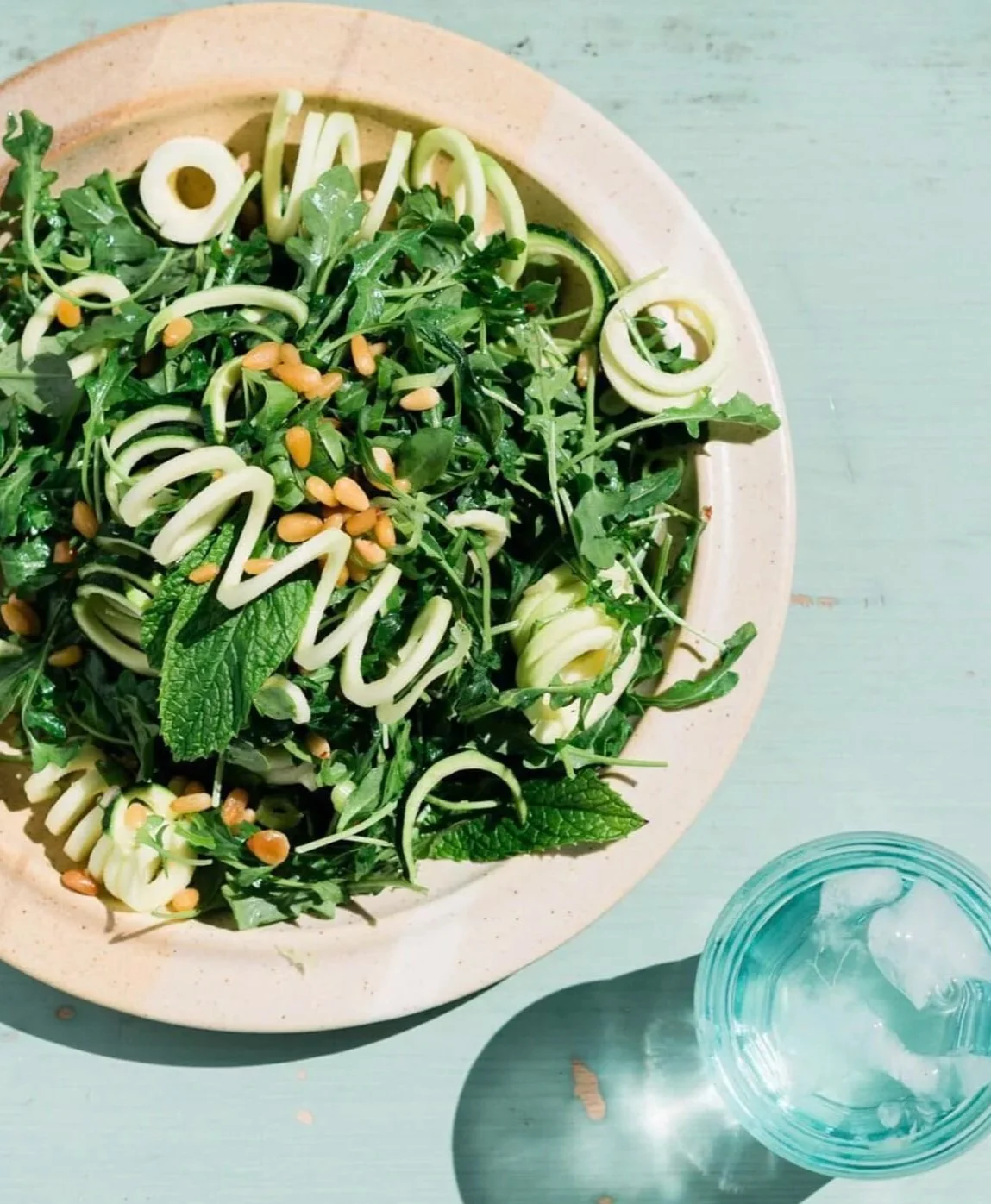
cucumber, melon, iceberg lettuce, tomatoes, celery, zucchini, strawberries, raspberries, fresh herbs
This can look like berries with breakfast, a citrusy salad at lunch, cucumber and herbs alongside dinner, or a soup packed with greens and vegetables.

3. Hydrating Rhythm
How you hydrate can matter just as much as what you are drinking. Sipping mineral rich beverages steadily throughout the day is often far more supportive than chugging large amounts all at once. Small, frequent sips allow fluid to be absorbed more gradually.
We want to focus on hydrating between meals rather than during them. Large amounts of fluid with meals can temporarily dilute stomach acid and digestive enzymes. A little space around meals helps preserve those digestive fluids while still keeping hydration steady across the day.
So rather than trying to catch up on water all at once, think in a rhythm: a warm broth in the morning, herbal tea mid morning, a fresh green juice in the afternoon, and consistent sips throughout the day instead of flooding the body.
Join The Functional Detox
Want to dive deeper into the benefits and practice of effective detox? The Functional Detox is designed to support your body’s innate detox pathways so you can reduce common signs of overload such as PMS, bloating, skin issues, and hormone imbalance.
Through strategic nourishment, hydration, mineral support, and daily habits that help promote healthy drainage and elimination, the goal is to help your body feel less burdened and more supported in doing what it is naturally designed to do.
Summer Season starts July 6th
https://thenourishedmother.us/the-functional-detox
Written by Functional Medicine Practitioner & Holistic Nutritionist
Magda Hjalmarsson